Home / Services
Services and techniques
What each treatment is, what it is used for, and what it feels like. Most visits combine two or three of these, chosen from the examination, not from a menu.
Chiropractic adjustment
A quick, specific movement applied to a joint that is not moving well, by hand or with an instrument. The audible pop is gas releasing from the joint fluid, not bone. Adjustments restore motion; the exam decides which joints need it and which should be left alone.
Active Release Technique (ART)
A patented soft-tissue method for muscles, tendons, ligaments and nerves. The practitioner applies pressure to the tight tissue while you move the limb through its range, breaking up adhesions that limit motion. Widely used for running and lifting injuries.
Flexion Distraction
A gentle, non-forceful technique on a special table that slowly flexes the lower back while the practitioner applies pressure. It reduces pressure inside the disc and is a first choice for disc bulges, sciatica and stenosis, especially where a forceful adjustment is not appropriate.
Spinal decompression
Motorized traction that gently separates the vertebrae in cycles to relieve pressure on discs and nerve roots. Sessions last about 20 to 30 minutes and are usually combined with exercise. Used for disc herniation, degenerative disc disease and some cases of sciatica.
Manual therapy, trigger points and myofascial release
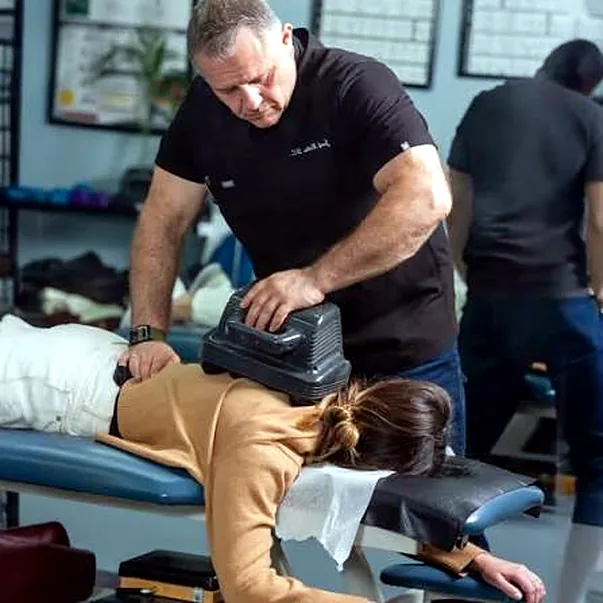
Hands-on work on the muscles and the fascia that wraps them. Trigger points are tender knots that refer pain elsewhere; sustained pressure and stretching release them. Often the part of the visit patients feel most immediately.
Therapeutic exercise
Every treatment plan ends with exercises you do at home, because the joint we move today will stiffen again unless the muscles around it change. Programs are short, specific and progressed at each visit.
Cold laser therapy
Low-level laser applied to injured tissue to reduce inflammation and support healing at the cellular level. Painless, with no heat. Used for tendon injuries, sprains and some joint pain.
Electrical stimulation (TENS and muscle stimulation)
Electrodes placed over the painful area deliver a mild current that reduces pain signals and relaxes muscle spasm. Usually combined with ice or heat at the start of a visit.
Therapeutic ultrasound
Sound waves that warm deep tissue, increase blood flow and reduce stiffness in tendons and ligaments. Common for shoulder, elbow and ankle injuries.
Ice and heat therapy
Ice in the first days of an injury to limit swelling; heat later to loosen tissue before treatment. Simple, and part of nearly every acute-injury plan.
Sinus therapy
Gentle pressure and drainage techniques on the face, head and neck to relieve sinus congestion and the headaches that come with it.
Massage therapy
Deep tissue, sports and prenatal massage, scheduled on its own or alongside chiropractic visits.
Posture correction
Assessment of how you sit, stand and work, followed by adjustments, exercise and practical changes to your desk and habits. Text neck and rounded shoulders are the usual targets.
Nutritional counseling and weight loss
Structured wellness coaching, customized dietary programs and functional nutrition plans. Read about nutrition services.
X-ray and imaging referral
Imaging when the exam calls for it, never as a routine, and referral for MRI or an orthopedic opinion when the findings warrant it.
Car accident and workers' compensation care
Examination, treatment and documentation for no-fault and workers' compensation cases.